ABSTRACT
Every practitioner concerned with craft knows the struggle of leaping between thinking an object and making it — between the word about an object, and making it part of the world. But suppose the two realms, word and world, were not so separate? Suppose they were two faces of the same thing, “two sides of the same thought?”
In an exchange between text, the textile and the architectural, The Weave: How to Wear the Word in a Woven World scripts a conversation in four parts . An outworking of Merleau-Ponty’s idea of the ‘reversibility of the flesh’ , the conversation delves into two faces of craft: the visible side (the well-crafted object) and the invisible side (the well-spoken word that is wit or ‘craftiness’), weaving word and world as one.
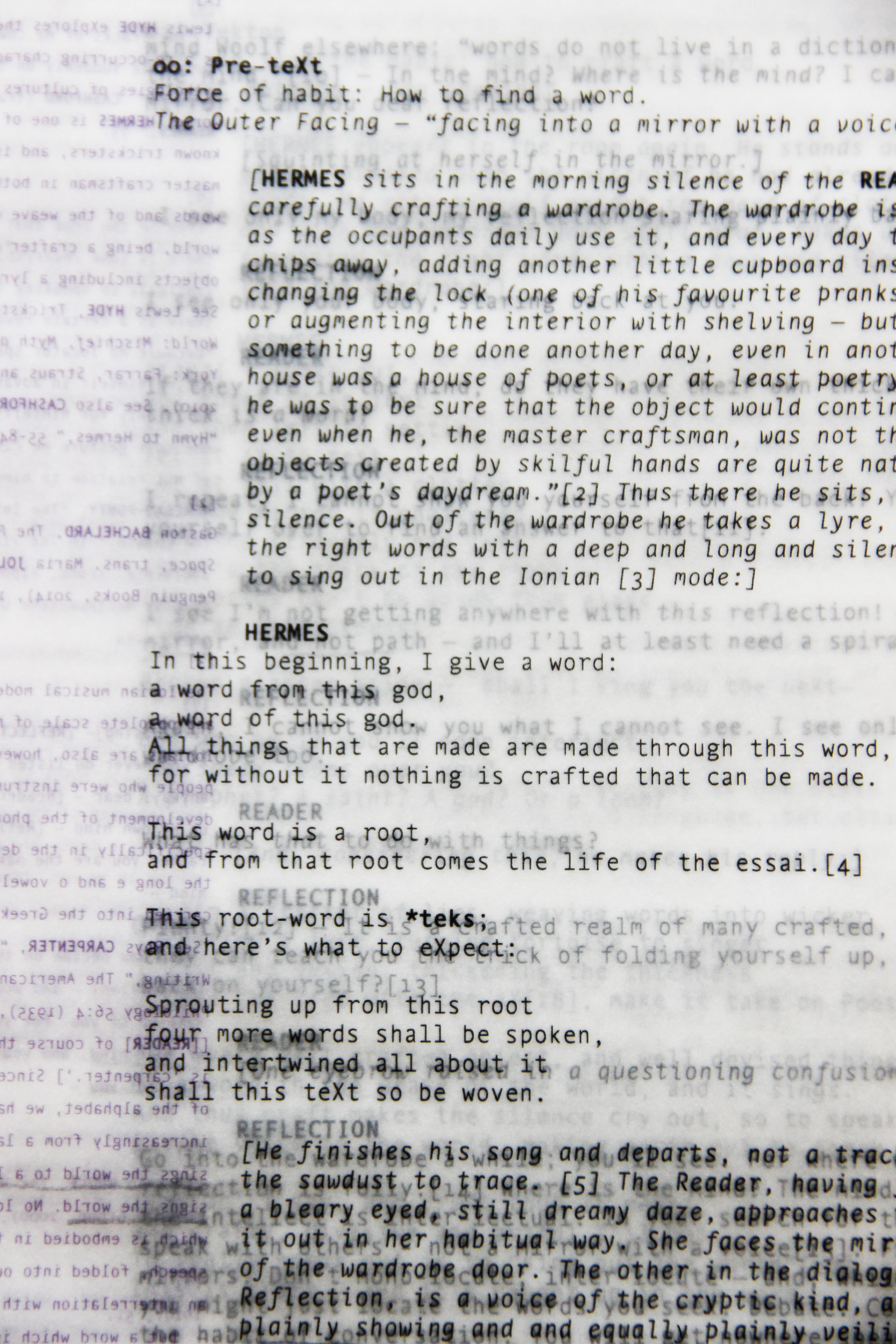
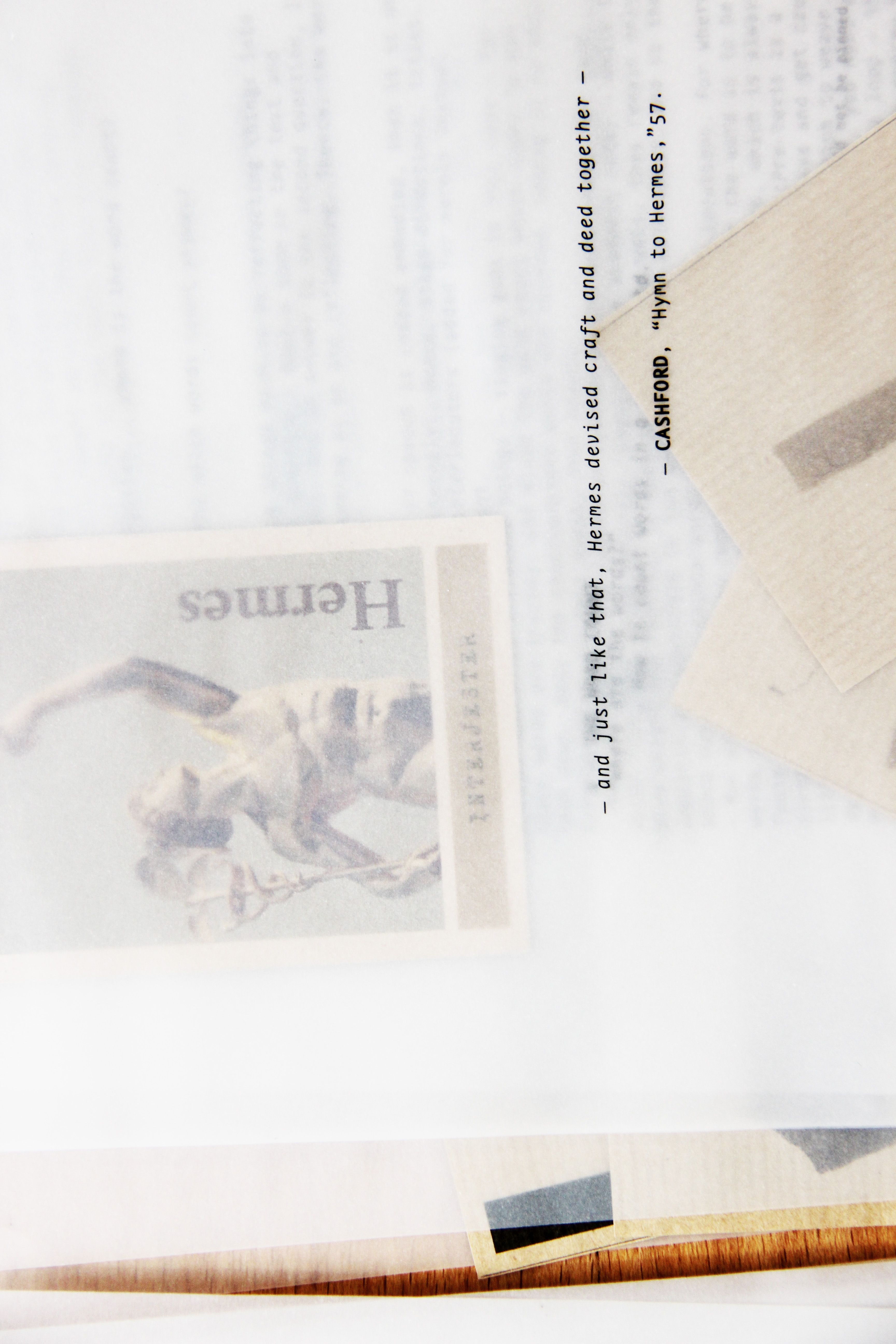
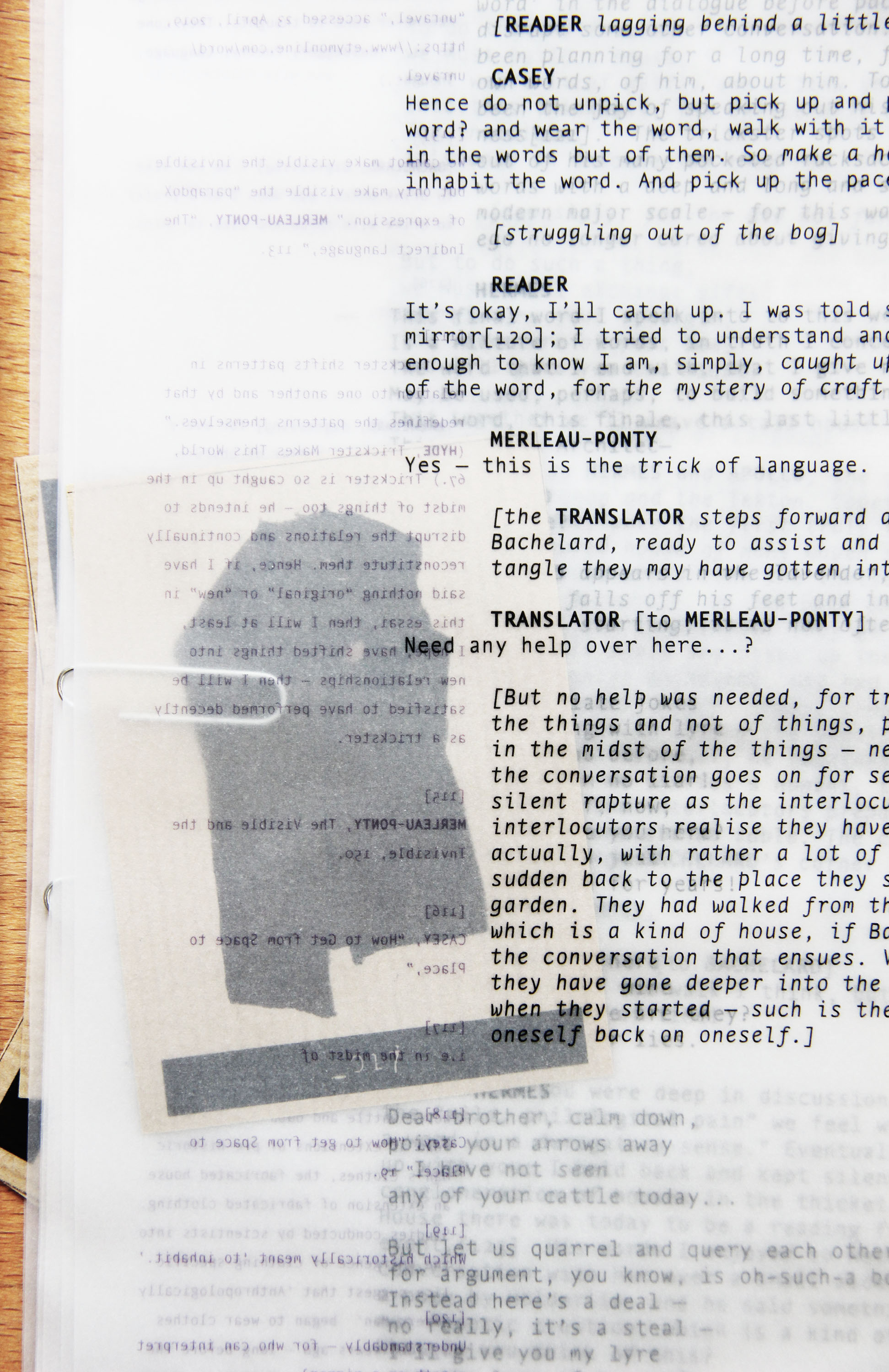
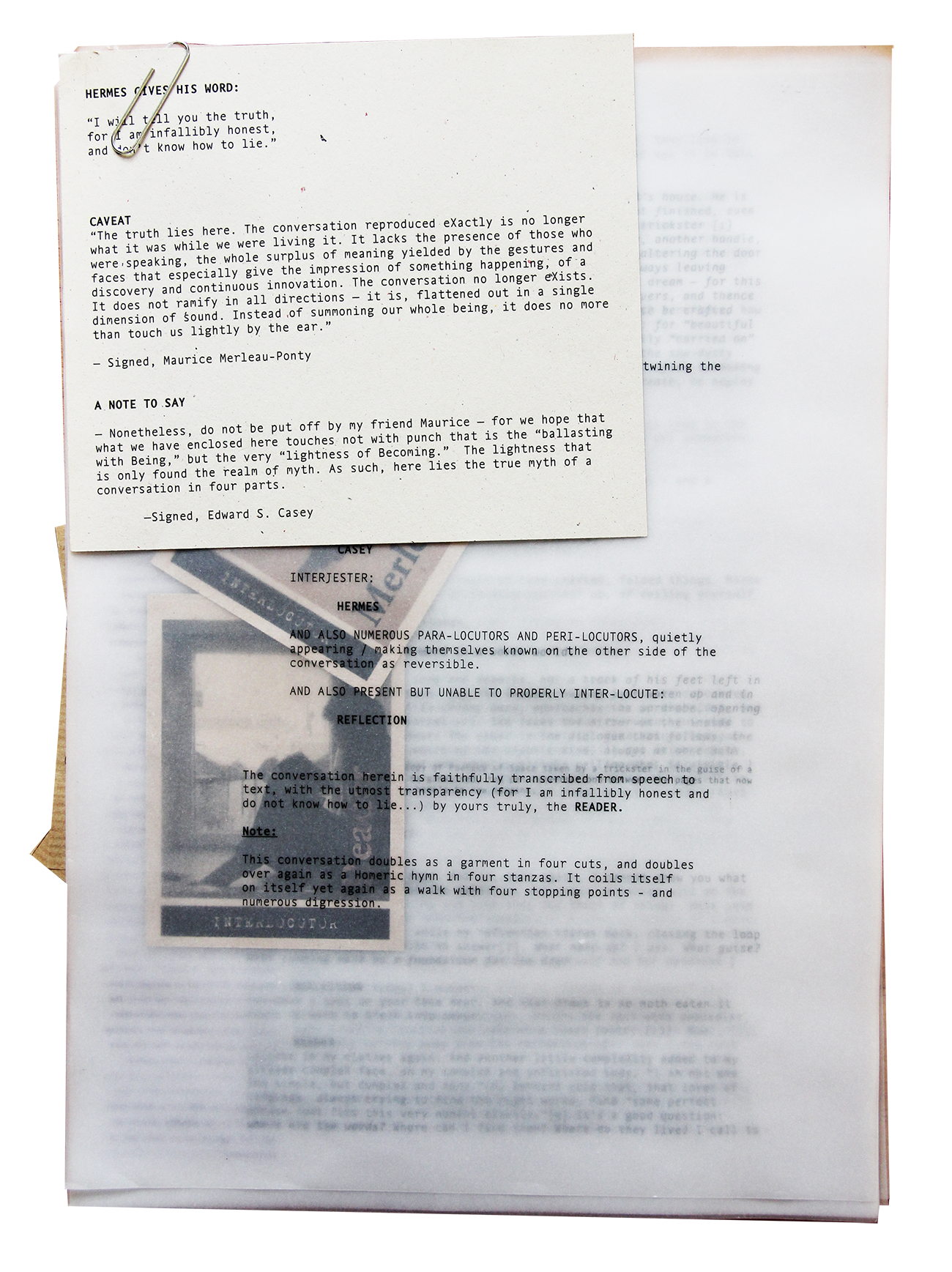
Merleau-Ponty asserts: “the painter does not live in the painting but in the painter at work.” In The Weave we have the word at work, and so the script was printed as an unbound, working manuscript on tracing paper, exhibiting the reversibility which it explores. It is best read within its working environment: a table at which there were places set, books read, ideas traded, writing undergone, interruptions made, arguments had — and curry eaten.