on the text as object
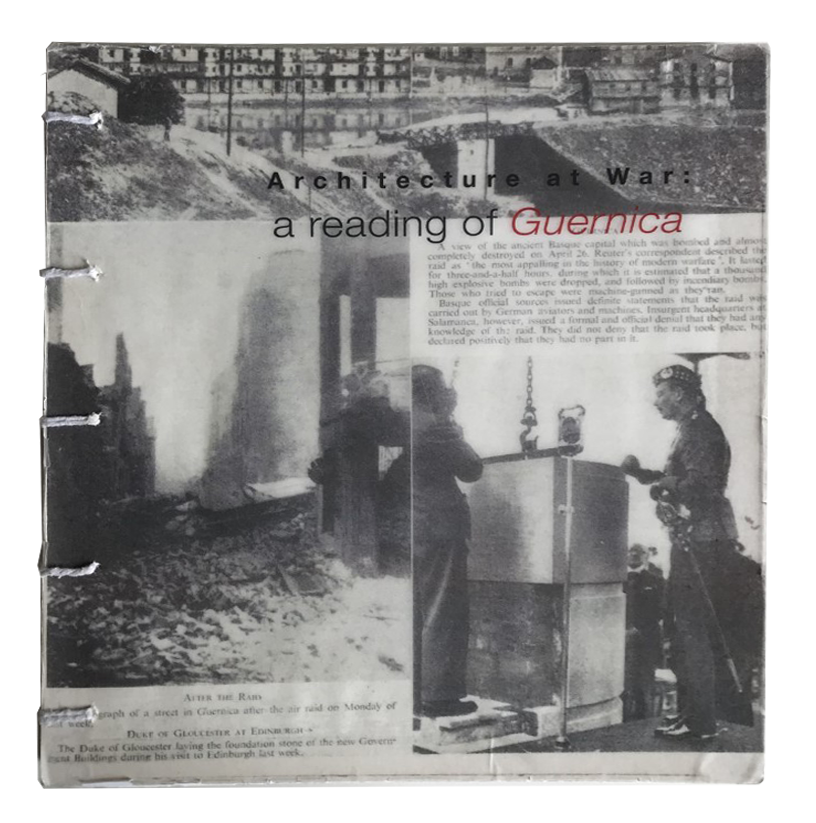
The study is structured by ‘scenes’ which are drawn out from Guernica, using them to guide an understanding of how the painting continues to be relevant decades after its first exhibition, and what it offers in response to an architectural reading. The intention is to understand Picasso’s work beyond the boundaries of the canvas, questioning whether it has a legitimate claim to (fostering or harbouring) spatial qualities. In doing so, this will hopefully encourage a new examining of the Guernica that extends beyond the the standard political and artistic concerns, considering it instead within the wider contexts of architectural destruction and damage. As such, this study demonstrates a subtle by influential quality within Guernica that enables it to accommodate its viewer not just aesthetically, but spatially as well.